Israel Approves Plan to Buy F-35 and F-15IA Fighter Jets from Lockheed and Boeing

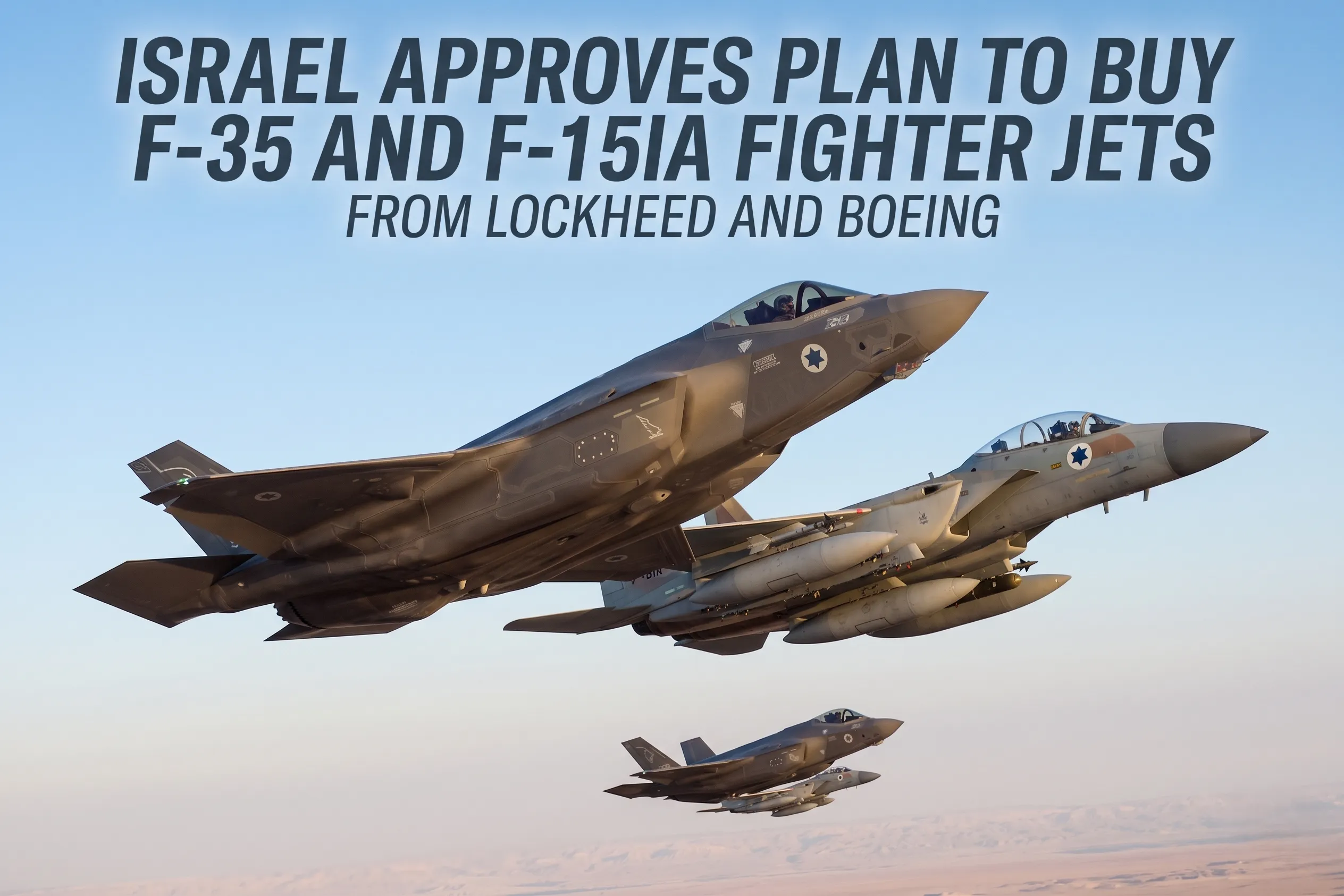
A decade of negotiations has culminated in Israel's approval of a plan to purchase advanced fighter jets from US defense giants Lockheed Martin and Boeing, marking a significant shift in the country's military capabilities. The acquisition of F-35 and F-15IA jets is a strategic move, driven by the need to maintain air superiority in a rapidly changing Middle East landscape. But that's not the full picture. The implications of this deal extend far beyond Israel's borders, influencing the regional balance of power and the dynamics of international relations.
The timing of this purchase is particularly noteworthy, given the current geopolitical tensions in the Middle East. As countries in the region continue to modernize their militaries, Israel's decision to upgrade its air force is seen as a necessary response to emerging threats. Here's what changed: the increasing presence of advanced missile systems and the growing military capabilities of neighboring countries have created a new reality, one in which Israel's existing fighter jets may no longer be sufficient to guarantee air superiority.
Table of Contents
Why Israel Is Buying F-35 and F-15IA Jets Now
The F-35 and F-15IA are two of the most advanced fighter jets in the world, offering unparalleled capabilities in terms of stealth, maneuverability, and firepower. The F-35, in particular, is a fifth-generation jet, designed to operate in contested environments and provide a significant advantage over older aircraft. What does this mean in practice? For Israel, it means having the ability to conduct missions deep within enemy territory, evading sophisticated air defense systems and striking high-value targets with precision.
The numbers say otherwise, however, when it comes to the cost and logistics of maintaining such advanced aircraft. The F-35, for example, is a complex system that requires significant investment in infrastructure, training, and maintenance. But for Israel, the benefits outweigh the costs, as the new jets will provide a critical edge in a region where military superiority is a matter of national security.
What Are the F-35 and F-15IA — Key Differences
The F-35 and F-15IA are two distinct aircraft, each with its own strengths and weaknesses. The F-35 is a multirole jet, capable of conducting air-to-air, air-to-ground, and reconnaissance missions. The F-15IA, on the other hand, is a specialized aircraft, designed primarily for air-to-air combat and interception. That's where it gets complicated, as the two jets will need to be integrated into Israel's existing air force, requiring significant adjustments to tactics, training, and doctrine.
A closer look at the specifications of each jet reveals the extent of their capabilities. The F-35, for example, has a range of over 1,200 miles, while the F-15IA has a range of over 2,000 miles. The F-35 is also equipped with advanced avionics and sensors, allowing it to detect and engage targets at long range. The F-15IA, on the other hand, has a higher top speed and is more maneuverable, making it an ideal platform for air-to-air combat.
Also Read
More Latest News stories →How This Deal Affects Middle East Air Power
The implications of Israel's fighter jet purchase extend far beyond its borders, influencing the regional balance of power and the dynamics of international relations. The introduction of advanced F-35 and F-15IA jets will undoubtedly alter the air power equation in the Middle East, potentially sparking a new arms race as neighboring countries seek to counter Israel's newfound capabilities. But what does this mean for the region's stability? The answer is complex, as the increased military capabilities of one country can have a ripple effect, leading to a destabilization of the entire region.
That's not the only concern, however, as the deal also raises questions about the role of the US in the region. The US has long been a key player in Middle East politics, and its decision to sell advanced fighter jets to Israel will be seen as a significant statement of support. The numbers say otherwise, however, when it comes to the potential risks and unintended consequences of such a move. As the region continues to evolve, it remains to be seen how the introduction of advanced fighter jets will impact the delicate balance of power.
Key Takeaways
- Israel's purchase of F-35 and F-15IA jets marks a significant shift in its military capabilities and a response to emerging threats in the region.
- The introduction of advanced fighter jets will alter the air power equation in the Middle East, potentially sparking a new arms race.
- The deal raises questions about the role of the US in the region and the potential risks and unintended consequences of such a move.
Frequently Asked Questions
Why is Israel buying F-35 and F-15IA jets?
Israel is buying F-35 and F-15IA jets to maintain air superiority in a rapidly changing Middle East landscape and to counter emerging threats from neighboring countries. The new jets will provide a critical edge in terms of stealth, maneuverability, and firepower, allowing Israel to conduct missions deep within enemy territory and strike high-value targets with precision.
What is the difference between F-35 and F-15IA?
The F-35 and F-15IA are two distinct aircraft, each with its own strengths and weaknesses. The F-35 is a multirole jet, capable of conducting air-to-air, air-to-ground, and reconnaissance missions, while the F-15IA is a specialized aircraft, designed primarily for air-to-air combat and interception.
How much will Israel's fighter jet deal cost?
The exact cost of Israel's fighter jet deal is not publicly available, as the terms of the agreement have not been disclosed. However, it is expected to be a significant investment, requiring substantial funding for the purchase, maintenance, and operation of the new jets.
How does this affect the Middle East balance of power?
The introduction of advanced F-35 and F-15IA jets will undoubtedly alter the air power equation in the Middle East, potentially sparking a new arms race as neighboring countries seek to counter Israel's newfound capabilities. The deal raises questions about the role of the US in the region and the potential risks and unintended consequences of such a move.
When will Israel receive the new fighter jets?
The delivery timeline for Israel's new fighter jets is not publicly available, as the terms of the agreement have not been disclosed. However, it is expected that the jets will be delivered over the next several years, with the exact timeline depending on a variety of factors, including production schedules and logistical considerations.
Conclusion
Israel's purchase of F-35 and F-15IA jets marks a significant shift in its military capabilities and a response to emerging threats in the region. As the Middle East continues to evolve, it remains to be seen how the introduction of advanced fighter jets will impact the delicate balance of power. One thing is certain, however: the region will be watching closely as Israel integrates its new jets into its air force, and the implications of this deal will be felt for years to come.
What readers should watch for next is how the regional dynamics will unfold in response to Israel's new fighter jets. Will neighboring countries seek to counter Israel's newfound capabilities, sparking a new arms race? Or will the introduction of advanced jets lead to a stabilization of the region, as countries seek to avoid conflict? The answer to these questions will depend on a variety of factors, including the actions of regional players and the role of the US in the Middle East. As the situation continues to unfold, one thing is clear: the introduction of F-35 and F-15IA jets will have far-reaching implications for the region and the world.
Sarah Mitchell
Senior Tech Editor
Tech journalist with 8+ years of experience covering the latest in smartphones, EVs, AI, and consumer electronics. Bringing you accurate, well-researched stories from the world of technology.
Leave a Comment