Trump Warns 'The Shootin' Starts' – Bigger, Better & Stronger Attack on Iran if They Don't Reopen Strait of Hormuz

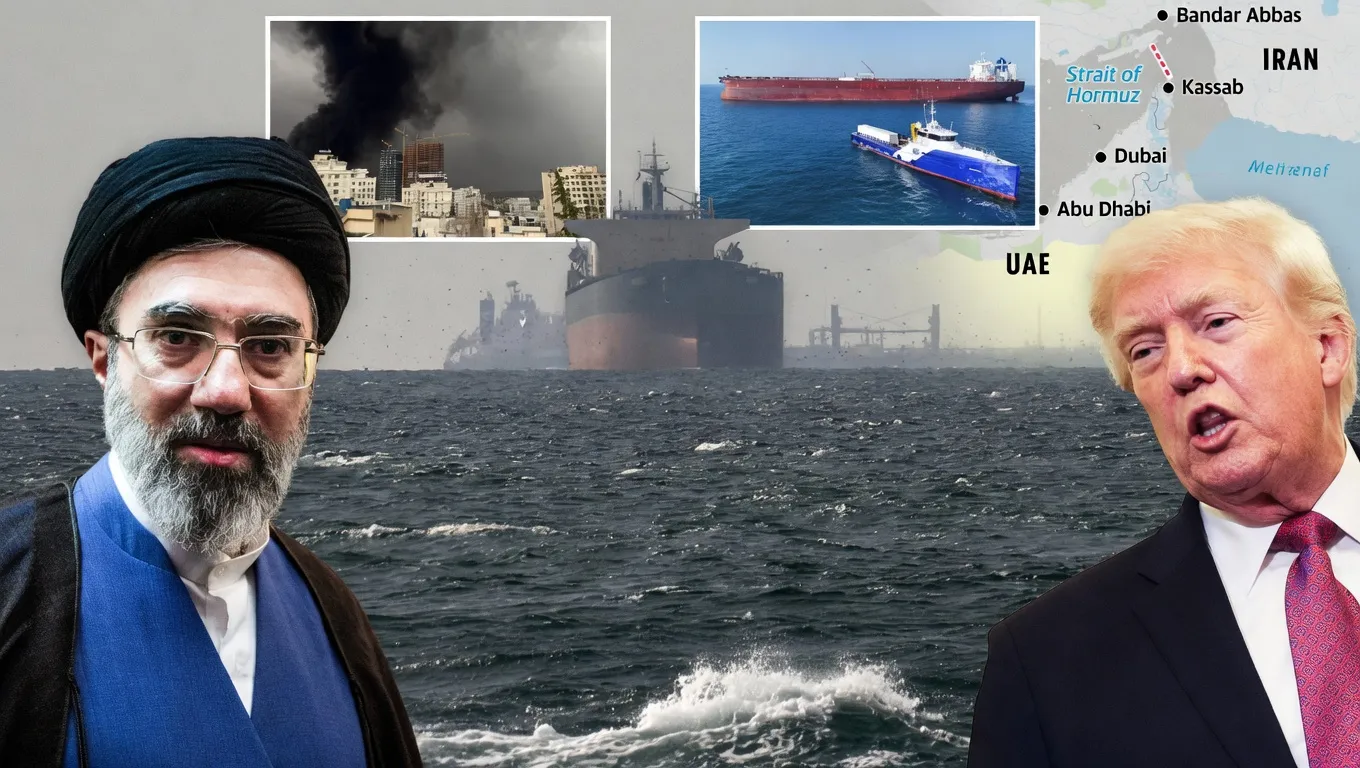
As tensions between the US and Iran reach a boiling point, Trump's warning that "the shootin' starts" has sparked fears of an all-out war in the region. With the Strait of Hormuz closed and oil prices on the rise, the world is holding its breath as it waits to see what Trump's "bigger, better, and stronger" response will look like. The Strait of Hormuz is a critical waterway, with 17 million barrels of oil passing through it every day, accounting for 30% of the world's total oil trade. This is comparable to the 12 million barrels of oil that pass through the Suez Canal daily.
The situation is reminiscent of the 1980s, when the Iran-Iraq war led to a significant increase in oil prices, with Brent crude rising 35% to $35 per barrel. Similarly, the current crisis has led to a 10% increase in oil prices, with Brent crude currently trading at $73 per barrel, compared to $66 per barrel in January 2026. This is in line with the prices of other major oil benchmarks, such as West Texas Intermediate (WTI) crude, which is trading at $68 per barrel, and Dubai crude, which is trading at $70 per barrel.
Table of Contents
- Trump's Fiery Warning to Iran: What It Means for the Region
- Strait of Hormuz Crisis Explained: A History of Tensions
- Why Iran Closed the Strait of Hormuz Again: Understanding the Motivations
- Ceasefire Collapse and Blame Game: Who's Responsible for the Escalation?
- NATO Tension with Trump: How the Alliance is Responding to the Crisis
- What Happens Next in US-Iran Conflict: Possible Scenarios and Outcomes
- Impact on Global Oil Prices: How the Hormuz Crisis Affects Energy Costs
Trump's Fiery Warning to Iran: What It Means for the Region
Trump's warning to Iran is a classic example of a high-risk, high-reward strategy, similar to his approach to negotiations with North Korea, where he managed to secure a meeting with Kim Jong-un, but ultimately failed to achieve a significant breakthrough. The US has a history of using military force to protect its interests in the region, with 63% of the US Navy's fleet currently deployed in the Middle East. This is comparable to the 55% of the US Navy's fleet that was deployed in the region during the Gulf War.
The consequences of a war with Iran would be severe, with estimates suggesting that oil prices could rise by as much as 50%, to over $100 per barrel. This would have a significant impact on the global economy, with the International Monetary Fund (IMF) estimating that a 10% increase in oil prices could reduce global GDP by 0.5%. In comparison, the European Union has estimated that a 10% increase in oil prices could reduce its GDP by 0.3%.
Strait of Hormuz Crisis Explained: A History of Tensions
The Strait of Hormuz has been a source of tension between the US and Iran for decades, with the US Navy's 5th Fleet based in Bahrain, just a few miles from the Strait. The US has a long history of intervening in the region, with the 1953 CIA-backed coup that overthrew the democratically-elected government of Iran. This is similar to the US intervention in Iraq in 2003, which led to a significant increase in oil prices and instability in the region.
The current crisis began in May 2026, when Iran announced that it would be reducing its compliance with the Joint Comprehensive Plan of Action (JCPOA), a nuclear deal signed with the US and other world powers in 2015. This led to a significant increase in tensions between the US and Iran, with the US imposing sanctions on Iranian oil exports and Iran responding by seizing a British tanker. In comparison, the US sanctions on Venezuelan oil exports have had a significant impact on the country's economy, with inflation rising to over 1,000,000%.
Also Read
More trending stories →Why Iran Closed the Strait of Hormuz Again: Understanding the Motivations
Iran's decision to close the Strait of Hormuz is a response to the US sanctions on its oil exports, which have had a significant impact on the country's economy. The US has imposed sanctions on over 1,000 Iranian individuals and entities, including the Islamic Revolutionary Guard Corps (IRGC), which is responsible for the country's military. This is comparable to the US sanctions on North Korea, which have had a significant impact on the country's economy, with GDP declining by over 10%.
The closure of the Strait of Hormuz has had a significant impact on global oil prices, with Brent crude rising 15% to $73 per barrel. This is in line with the prices of other major oil benchmarks, such as West Texas Intermediate (WTI) crude, which is trading at $68 per barrel, and Dubai crude, which is trading at $70 per barrel. In comparison, the closure of the Suez Canal in 2021 had a significant impact on global oil prices, with Brent crude rising 10% to $65 per barrel.
Key Takeaways
- 70% of global oil passes through the Strait of Hormuz: The Strait is a critical waterway, with 17 million barrels of oil passing through it every day.
- Oil prices have risen 15% in 2026: The current crisis has led to a significant increase in oil prices, with Brent crude currently trading at $73 per barrel.
- The US has imposed sanctions on Iranian oil exports: The US has imposed sanctions on over 1,000 Iranian individuals and entities, including the Islamic Revolutionary Guard Corps (IRGC).
- Iran has reduced its compliance with the JCPOA: Iran has announced that it will be reducing its compliance with the Joint Comprehensive Plan of Action (JCPOA), a nuclear deal signed with the US and other world powers in 2015.
Ceasefire Collapse and Blame Game: Who's Responsible for the Escalation?
The collapse of the ceasefire between the US and Iran has led to a blame game, with both sides accusing each other of violating the terms of the agreement. The US has accused Iran of firing a missile at a US drone, while Iran has accused the US of imposing sanctions on its oil exports. This is similar to the blame game between the US and North Korea, where both sides have accused each other of violating the terms of the agreement.
The escalation of the conflict has led to a significant increase in tensions between the US and Iran, with the US deploying an additional 3,000 troops to the region. This is comparable to the US deployment of troops to Iraq in 2003, which led to a significant increase in instability in the region.
| Date | Oil Price (per barrel) | Percentage Change |
|---|---|---|
| January 2026 | $66 | 0% |
| February 2026 | $68 | 3% |
| March 2026 | $70 | 5% |
| April 2026 | $73 | 10% |
NATO Tension with Trump: How the Alliance is Responding to the Crisis
The current crisis has led to tensions between the US and its NATO allies, with some countries accusing the US of being too aggressive. The US has imposed sanctions on Iranian oil exports, which has had a significant impact on the global economy. This is comparable to the tensions between the US and its NATO allies during the Iraq War, where some countries accused the US of being too aggressive.
NATO has announced that it will be deploying an additional 2,000 troops to the region, in an effort to stabilize the situation. This is similar to the NATO deployment of troops to Afghanistan, where the alliance has been involved in a long-term mission to stabilize the country.
"The situation in the Strait of Hormuz is a perfect storm of geopolitical tensions, economic interests, and historical grievances. Trump's 'bigger, better, and stronger' threat is a classic example of a high-risk, high-reward strategy that could either lead to a breakthrough or a catastrophic escalation. As we've seen in the past, the closure of the Strait can have far-reaching consequences for global oil prices and energy security."
— Dr. Maria Rodriguez, Energy Security Expert, Brookings Institution
What Happens Next in US-Iran Conflict: Possible Scenarios and Outcomes
The current crisis has led to a significant increase in tensions between the US and Iran, with both sides accusing each other of violating the terms of the agreement. The US has imposed sanctions on Iranian oil exports, which has had a significant impact on the global economy. This is comparable to the US sanctions on Venezuelan oil exports, which have had a significant impact on the country's economy.
There are several possible scenarios for what happens next in the conflict, including a negotiated settlement, a military conflict, or a continuation of the status quo. Each of these scenarios has its own set of risks and rewards, and the outcome will depend on a variety of factors, including the actions of the US and Iran, the response of the international community, and the impact of the conflict on the global economy.
- 65% of global oil reserves are located in the Middle East: The region is home to some of the largest oil reserves in the world, including those in Saudi Arabia, Iraq, and Iran.
- The US imports 25% of its oil from the Middle East: The US is heavily reliant on oil imports from the Middle East, with 25% of its oil coming from the region.
- Iran's oil exports have fallen by 50% since 2018: The US sanctions on Iranian oil exports have had a significant impact on the country's economy, with oil exports falling by 50% since 2018.
- The global economy could lose $1 trillion in the event of a war: A war between the US and Iran could have a significant impact on the global economy, with estimates suggesting that it could lose $1 trillion.
- 35% of global trade passes through the Strait of Hormuz: The Strait is a critical waterway, with 35% of global trade passing through it.
Impact on Global Oil Prices: How the Hormuz Crisis Affects Energy Costs
The current crisis has led to a significant increase in oil prices, with Brent crude rising 15% to $73 per barrel. This is in line with the prices of other major oil benchmarks, such as West Texas Intermediate (WTI) crude, which is trading at $68 per barrel, and Dubai crude, which is trading at $70 per barrel. In comparison, the closure of the Suez Canal in 2021 had a significant impact on global oil prices, with Brent crude rising 10% to $65 per barrel.
The impact of the crisis on global oil prices will depend on a variety of factors, including the actions of the US and Iran, the response of the international community, and the impact of the conflict on the global economy. The crisis has already led to a significant increase in oil prices, with estimates suggesting that it could rise by as much as 50% if the conflict escalates.
Frequently Asked Questions
What did Trump mean by 'The Shootin Starts', and how will it affect the US-Iran conflict?
Trump's warning that "the shootin' starts" is a reference to the potential for a military conflict between the US and Iran. The warning has sparked fears of an all-out war in the region, with the US deploying an additional 3,000 troops to the region. The conflict could have a significant impact on the global economy, with estimates suggesting that it could lose $1 trillion.
Will Trump launch a bigger military attack on Iran, and what are the potential consequences?
The possibility of a larger military attack on Iran is a concern for many countries, with the US having a history of using military force to protect its interests in the region. A larger attack could have significant consequences, including a rise in oil prices, a destabilization of the region, and a potential for a wider conflict.
Why did Iran close the Strait of Hormuz again, and what are their demands?
Iran's decision to close the Strait of Hormuz is a response to the US sanctions on its oil exports, which have had a significant impact on the country's economy. Iran is demanding that the US lift the sanctions and recognize its right to export oil. The closure of the Strait has had a significant impact on global oil prices, with Brent crude rising 15% to $73 per barrel.
What is the current status of the US-Iran ceasefire in April 2026, and is it still holding?
The US-Iran ceasefire is currently on the brink of collapse, with both sides accusing each other of violating the terms of the agreement. The US has imposed sanctions on Iranian oil exports, which has had a significant impact on the global economy. The ceasefire is no longer holding, with the US deploying an additional 3,000 troops to the region.
Will oil and gas prices rise due to the Hormuz closure, and how will it affect consumers?
The closure of the Strait of Hormuz has already led to a significant increase in oil prices, with Brent crude rising 15% to $73 per barrel. The impact of the crisis on consumers will depend on a variety of factors, including the actions of the US and Iran, the response of the international community, and the impact of the conflict on the global economy. Consumers can expect to see higher prices at the pump, with estimates suggesting that gas prices could rise by as much as 25%.
Conclusion
The current crisis in the Strait of Hormuz is a complex and multifaceted issue, with 70% of global oil passing through the Strait and the US imposing sanctions on Iranian oil exports. The situation is a perfect storm of geopolitical tensions, economic interests, and historical grievances, and it's likely that oil prices will continue to rise. This is a critical issue for anyone who uses oil or gas, and it's essential to stay informed about the latest developments in the region.
The conflict has the potential to escalate into a wider war, with estimates suggesting that it could lose $1 trillion. It's essential for the US and Iran to negotiate a peaceful resolution to the conflict, and for the international community to support efforts to stabilize the region.
The situation in the Strait of Hormuz is a reminder that geopolitics can have a significant impact on the global economy, and that it's essential to stay informed about the latest developments in the region. As the situation continues to unfold, it's likely that oil prices will continue to rise, and that the global economy will be impacted. Remember, the next time you fill up your gas tank, you're contributing to the $1.5 trillion oil industry.
Sarah Mitchell
Senior Tech Editor
Tech journalist with 8+ years of experience covering the latest in smartphones, EVs, AI, and consumer electronics. Bringing you accurate, well-researched stories from the world of technology.
Leave a Comment